


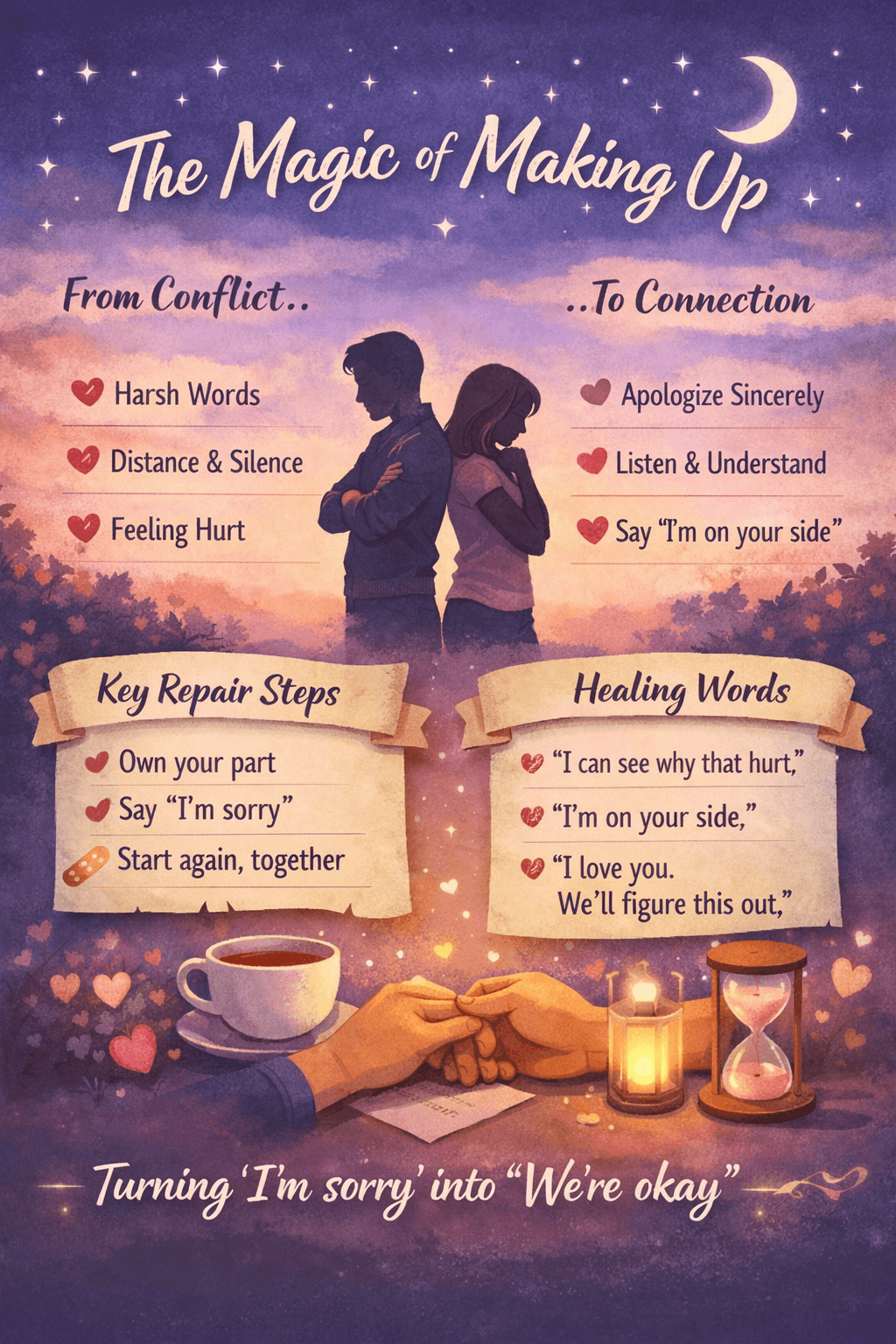
It’s not the argument that matters most
Let’s be honest: every couple argues. Even the happiest ones. The real difference isn’t whether you clash, but how you come back together afterwards. Making up is where trust is rebuilt, safety is restored, and that quiet reassurance returns: we’re still alright.
Repair is a skill, not a personality trait
Some people grew up seeing calm, respectful conflict. Others grew up with shouting, silence, or doors closing. If “making up” feels awkward, you’re not broken — you’re learning. And like any skill, it improves with practice.
A good repair sounds like:
- “I didn’t handle that well — I’m sorry.”
- “I can see why that hurt.”
- “Can we start again?”
No grovelling. No scoreboard. Just ownership and warmth.
Small moves that make a big difference
Try lowering the temperature before you tackle the topic. A drink of water, a slow breath, a softer tone. Then swap blame for impact:
- Instead of “You always…” try “When that happened, I felt…”
That one change can stop a conversation turning into a courtroom.

The most powerful words aren’t dramatic
Try this simple sentence: “I’m on your side.”
It changes the whole mood. Because the goal isn’t to win — it’s to reconnect.
A gentle rule that saves relationships
Don’t leave your partner guessing. Even if you need space, say:
“I’m overwhelmed, but I love you. I’ll come back to this.”
That one line can reduce stress instantly — and stop distance turning into damage.
Making up isn’t weakness. It’s emotional strength — and it’s one of the most loving things you can do.


