
Carole's blog

Carole Spiers

Carole Spiers

I am a Relate-trained Integrative counsellor & member of the British Association for Counselling & Psychotherapy (BACP). Working as a Relationship Advice expert, I appreciate that you maybe going through a rough patch with your partner, spouse or even your children. Let me help you find the key to improving your relationship that will increase your joy & understanding of each other.

22 SEPTEMBER 2021 By In Stress

phone

Sonya, is a Sales Manager in a Pharmaceutical company, a position that had taken her over 10 years to attain. She prides herself on her communication skills but at her appraisal meeting, she was told that her formal and blunt emailing style needed to be more ‘friendly’. She was very surprised and argued that the quantity of email that she had to deal with each day, meant that each one had to be actioned quickly, and with no real time for pleasantries.

Which leaves the question: could formal and blunt email messages be taken by the recipient as a form of cyber bullying? The answer is, ‘No!’. Cyber-bullying is writing with the intent to humiliate an individual by publishing adverse comment about him or her.

Although Sonya never does this, nevertheless her style of writing which is terse and short could be taken by the recipient as ‘unfriendly’ – which may not be termed ‘bullying’ but will nevertheless not make her addressee feel valued. Each time someone were to receive an email from her, it would seem like she is giving a directive or a command. Now, you may say that is what she is doing. However, I would say to you that there are better ways of getting the most out of others and that is not by making them feel that they are automaton. People like to feel valued and appreciated for not only what they do but who they are.

So where is the line between a direct and blunt, personal management style and bullying behaviour?

Many of us receive over fifty emails per day and our aim is to try to clear our inbox as quickly as possible, but in our haste, we may write in a way that can offend or which can appear as unnecessarily abrupt. When emailing, we very often ignore the usual courtesies that we use when writing a letter. Many times emails are received, and written, with no subject header but just the bare message, with the result that the words often appear to be harsh.

Do you remember the days when you would receive a letter by mail with a handwritten signature – instead of one that was scanned electronically? Unfortunately, such personal correspondence is now a thing of the past.

So what can you do about it?

  • Never answer email if you are angry or emotional. If you wish to ‘let off steam’, then do so but put the email into your ‘draft’ box, as you may not wish to send it in the morning!
  • When you have written your email, read it as if you were the person receiving it.
  • Try and use words or phrases such as ‘I appreciate’, ‘you have done a great job’, ‘many thanks’, ‘you have done really well’, etc.
  • Don’t copy in your emails or texts to the whole office when you don’t need to!
  • Don’t send out emails late at night and set a poor example for working long hours
  • Don’t make your messages ‘high-priority’ unless it is really urgent.
  • If you need to be direct with someone – think of the words that you say BEFORE you write them.
  • If you have sent an email and are not happy with what you have written, then pick up the phone and tell them, in advance.
  • When have finished the email, then read it as if you were the one who is about to receive it. If you are happy with it, then send. If not, then revisit.

If you manage your emails and texts correctly and give praise at the appropriate time, then when you need to criticise, there will be a balance.

We tend to forget that once an email has been sent, then it is there for all time. We cannot retract what has been put down on paper, but we can use the ‘old fashioned’ means of saying ‘I’m sorry’ if upset has been caused.

Key Points

  • Emails & texts show no emotion
  • Give appreciation in your emails
  • Electronic messaging needs care

PS And the same goes for your personal relationships as well as your business relationships

01 JULY 2021 By In Stress

Procrastination Kills Opportunities

doitnowIn 2011, an Englishman whose ambition was to climb Mount Kilimanjaro, the highest point in Africa before he turned 70, achieved his goal, only to die shortly after sending his wife a text from the summit. Alistair Cook suffered a heart attack as he descended and his final message to his wife read ‘Reached the summit at 09.50, feel exhausted but so happy’.

This story begs the questions:  Is it ever too late to realise our dreams? Is there any time limit? Do we have to wait for retirement when we may be less fit than we are now, or when we have lost drive and motivation as our energy levels eventually fall?

Your dream could be scuba diving with dolphins, meeting the partner of your dreams, studying for an MBA, opening your own business, building your own house, buying a Harley bike, going on safari, mentoring others to pass on your skills to the next generation – or maybe just to lie on the beach in Florida on the Gulf of Mexico.  The reality is, however, that many of us never see that dolphin, because we just let the days tick by, and we lose our focus and direction.  And then, for many reasons, it is often too late.  The time for personal action is now. Today is real. Tomorrow is never here.

My own stress

magnet me LDcC7aCWVloI remember telling my publisher, LexisNexis, when I finished my first book ‘Tolley’s Managing Stress in the Workplace’ that it would be my first and last as I had found the whole experience incredibly stressful - the irony being that the book was about stress management!  However, five years later, my third book ‘Show Stress Who’s Boss!’ was published.  The point being that in each of us, our goal posts move with time, and it is important that we are open to these changes.
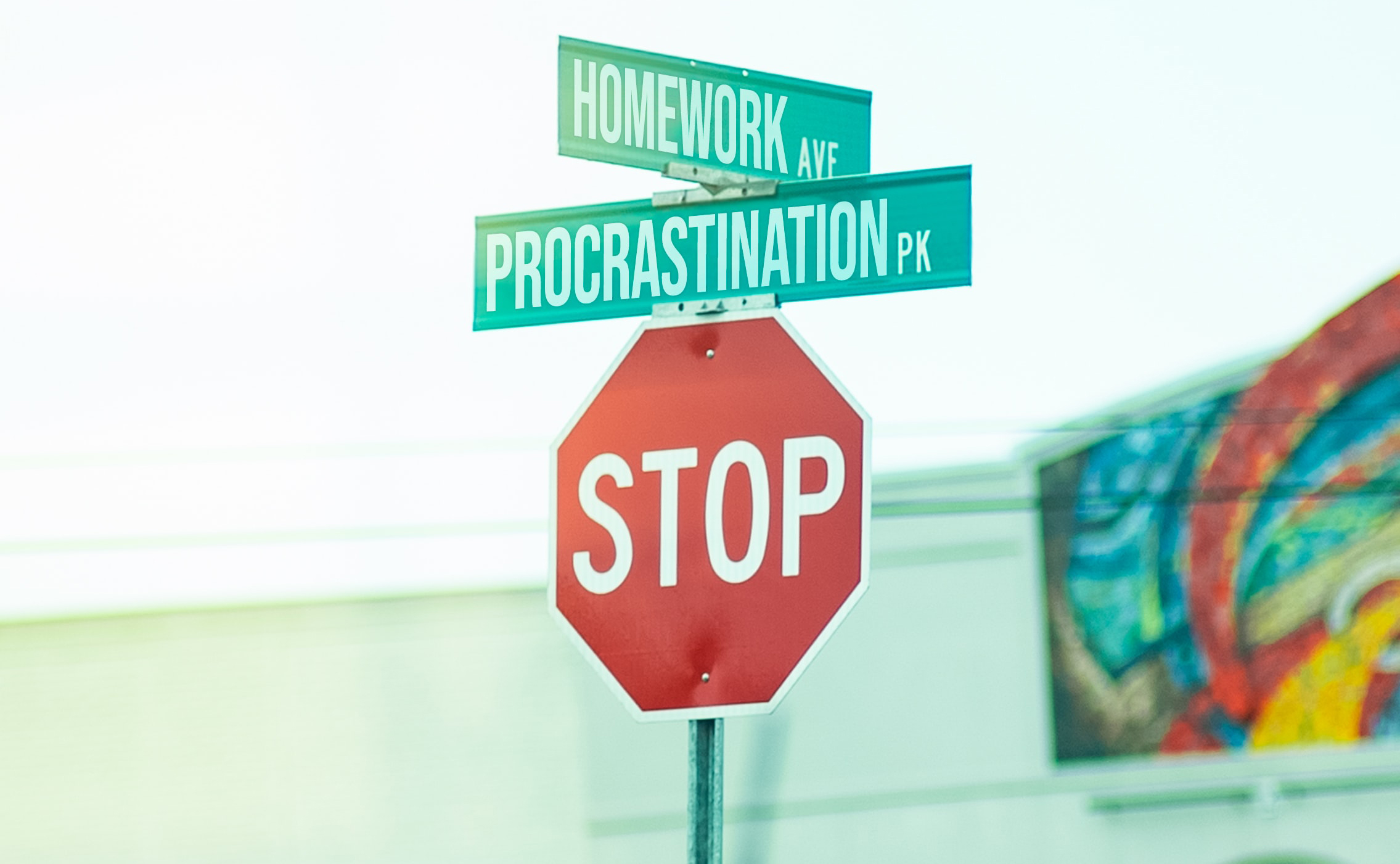

So why not take a minute, now, and write down three things you really want to do after your own children leave home for university and your hair goes grey? What dreams do you have when you finally have the time and space?

Don’t forget that we human beings love to procrastinate.  In life, there are many wakeup calls.  It is only when we hear of someone dying at a young age, that we stop for a moment and note that it puts our own life into perspective, and we should resolve to live every day as if it were our last.  But this thought is transient, and soon we revert to our old ways again.

So don’t let life pass you by as you sit in front of a computer screen.  Don’t let stress get in the way of your creativity and innovation.  When you can’t ‘see the wood for the trees’, then maybe this is the time to reassess where you are and what you are doing.  Sometimes, you can do this alone and at other times you may need a neutral, objective person who will listen to you - someone who is totally there for you, to help look at how you manage your daily activities, your family life, your work life, and your aspirations.This person will hold you accountable for what it is that you want to do.  When you tell someone else that you are going to take a specific action, then you start to become accountable.  When you have idea that is only inside your head, it is easy to put it to one side.

The first step is to write down what it is that you want to do, to experience, where you want to go, what you want to achieve, who you want to meet.  Writing it down converts it from just a thought to an ‘action needed’. Stick the note on the wall, by your bed, in the kitchen, on the TV. Wherever it will remind you that if you want something badly enough, you must take some action to get it started.    Try now!  Find the pencil and start writing.   And I will meet you on the beach in Florida or maybe in the Bismarck Hut on the way up to the snows of Kilimanjaro.

Key Points

pedro da silva unEmGQqdO7Q

     
  • There is no time-limit on dreams
  • Today is here. Tomorrow is always yet to come.
  • Write your dream down and commit to it!
01 JUNE 2021 By In Relationship Advice

Front page TO REPLACE BLACK GIRLIs there someone in your office with whom you find it challenging to deal?  Is your life at work being harmed by a difficult relationship?  That difficulty could be with a colleague, a business partner, a manager, director, customer or supplier.  You may be spending time at night worrying about it; thinking about it constantly and/or discussing it with colleagues, husband or wife.
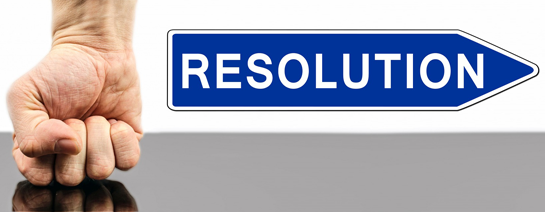


It is often said that we cannot choose our family and therefore need to learn how to manage our relationships with them - and the same applies to those at work.    If a particular individual is not to our personal liking – for any reason – then because we do not have the luxury of walking away, we need to find a basis upon which to communicate. We all have a job to do and we need to be able to communicate well with everyone in our team. That still applies even if you are a sole practitioner, as you will need to communicate politely with clients/ customers, who you may not like, for otherwise you will have no business!

5 Quick Tips for You

So let’s look at some strategies that will hopefully take you from actively disliking someone, to accepting them for who and what they are.

Value the differences:  Being human, we all naturally relate better and more quickly to those we perceive as being like us.   The solution is to correctly identify the differences and to value the dissimilarities and variances between personalities and cultures. (Think about it: if oranges, apples and mangoes were all the same shape, colour and taste – meals would be very boring!)

The 24-hour wait:  If someone has said or done something that you don't like, then endeavour not to react immediately.  Try ‘sleeping on it’ and your perspective may well be different in the morning, plus the way that you decide to deal with the situation may be more professional and better considered.

Talk it out:  If you really have a continuing problem with someone, you can just ‘bury your head in the sand’ and become more angry and frustrated or, alternatively, you can take the initiative and arrange a convenient time and place to talk.  I appreciate that in the short term you may not wish to do this but in the long term, it could have measurable benefits to your relationship and subsequent interaction. (This applies whether the individual is above you or below you in the corporative hierarchical structure).

Therefore [a] Choose a time and place [b] acknowledge there are problems between you [c] outline the conduct that you find a problem, and give examples [d] explain how this affects you and  [e] find out what you can both do to improve the relationship.  

This should be a two-way communication without appropriating blame on either side, plus an opportunity to negotiate issues and find a common way forward that is acceptable to you both.

blog 2

Be positive and interested:  If you don't like someone, it is tempting to share these feeling with your fellow colleagues but this is just the time for tact and diplomacy.  Gossiping can destroy morale and productivity and however unpopular the other person may be; it can also impact and damage your own reputation.  If you need to offload your feelings, then find a trusted friend or even a family member who will listen and allow you to vent your feelings, safely.

Look from the other person’s perspective:  This will mean putting your own views and judgments to one side and looking at the problem as if you were the other individual.  With this technique of being empathic, it can be surprising how different a relationship can look from the other side!

Of course, such a relationship will only improve if you both really want it and are prepared to work at it and maybe make concessions.  ‘Rome wasn't built in a day’ and it may take more than one meeting to improve the connection and to establish a rapport but if you both are willing to take this tangible and positive, first step, then you may well find that the rest will follow far more easily than you first thought possible.
 
Have a Chat

Get in touch if you have a relationship at work or at home and would like to have a confidential chat. https://bit.ly/2BGSXJC

15 JULY 2020 By In Relationship Advice

Relationship Advice for New Couples

When the lockdown was announced, couples were forced to make a big decision: move in together or face the consequences of separation. Many couples made the former choice and fast-tracked their relationship to the next level even though this might not have been something they would have considered for weeks or months, coining the term ‘turbo relationships’.

Turbo Relationships Are Working!

It turns out that making that premature milestone, ignoring the relationship advice from friends or snarky remarks from family, has actually worked! Dating sites like eharmony and Relate have found that new couples that moved in together are feeling more committed than before and now know they want to spend their lives together.

Why?

You’ve probably found this yourself when you live with friends or family members, you reach a stage where you talk to each other constantly about anything and everything, providing the opportunity to learn about your partner’s life experiences, childhood and dreams. Relationship therapists and experts are explaining this through the fact that these couples have been able to get to know one another’s interests and personalities better as well as taking their sexual relationship to new heights.

You've been there for each other

It has also meant that whilst struggling with the impact of the lockdown, experiencing stress, loneliness or even just feeling a bit down at times, you’ve been able to see many different sides to your partner and you’ve been able to help one another out of the low points, solidifying your bond.

You've been a priority

Before lockdown, our lives were filled with other commitments - family, friends, work, hobbies. However throughout lockdown, many of these pressures have been eliminated or reduced with people working from home, unable to see their friends and families and no longer having the option to attend events or activities. There have been virtually no distractions and there’s been no pressure to do anything but spend time with one another.

You've helped each other out

Some couples have realised that living together eases some of their daily stressors, having somebody there to make dinner when you’re busy with work or too tired to cook, sharing the cleaning duties or taking it in turns to do the shopping as opposed to doing everything yourself. This also reveals a compassionate, sensitive and understanding side to a person, increasing attraction and enabling yourself to view them as a possible long-term relationship.

Will Turbo Relationships Continue to be Successful Post-Lockdown?

Obviously this will depend on the relationship and the way they re-enter their post-lockdown lives. One way to look at it is that solid foundations have been laid throughout this time, providing more strength and stability to navigate their way through later obstacles. New couples now know that they either were or weren’t ready for that next stage of the relationship and adjustments can be made if needed. They also made it through one of the most unprecedented and difficult times in recent years which has to provide some confidence.

Relationship Advice

One of the most important pieces of relationship advice I give to clients is to make time for one another. Building and maintaining a relationship takes time and effort. They need to see each other regularly and be present during these periods. Throughout lockdown, many couples will have realised how lucky they are to have one another and also, how much they’ve enjoyed spending their time together. This means that going forward, couples might choose to spend time together rather than seeing friends every weekend, and making the most of their evenings together rather than working late and checking their emails constantly.

For those turbo relationships that have used the lockdown as an opportunity to learn about one another, value and appreciate each other, and have genuinely enjoyed spending all of their time together should definitely feel confident heading into the next chapter of their lives.

Time will tell.

On the 1st June, The Independent published an article claiming that whilst the UK lockdown seems to be easing, the new lockdown rules in England have made it illegal for couples who do not live together to have sex indoors, placing much strain on relationships.


So What Are The New Lockdown Rules?

As of the 1st June, The Health Protection Regulations are restricting where people can sleep and gather together. The law defines a gathering: “There is a gathering when two or more people are present together in the same place in order to engage in any form of social interaction with each other, or to undertake any other activity with each other.”

This will mean that gatherings of more than six people in an outdoor space will be prohibited, as well as gatherings of two or more people indoors.

It will also be made illegal to stay overnight outside of your own home without a reasonable excuse. This is said to include moving home, attending funerals, escaping harm or providing care. It does NOT include couples who do not live together, meaning they can see each other in outdoor spaces but not inside.

So Sex Is STILL Off The Table

Pre-existing laws make it illegal to have sex in outdoor places due to public indecency and indecent exposure, therefore many couples who have spent months apart, and are now permitted to reunite, are still unable to have sex.

Although the UK lockdown seems to be easing, the regulations are becoming stricter about what we are able to do with other people in our households and those outside of them. Many couples have experienced strain on their relationships after the lockdown measures previously banned those couples who did not live together from meeting.

This meant that couples were either forced to go without seeing one another beginning on the 24 March, or were encouraged to move in together if they wanted to continue seeing each other. This has likely placed much strain on relationships as individuals have either had to deal with missing their partner and experiencing feelings of loneliness, or had to jump into a situation that their relationship may not have been ready for, resulting in its own set of challenges.

At the start of lockdown when the infection rate and the death rate was still very high, it was obvious why this was the case. If individuals were switching between different households, it would defeat the purpose of reducing social contact and would encourage transmission of the virus.

Is Anyone Exempt?

The new provision from the Health Protection Regulations includes a long list of exemptions, including for athletes that need to train and for children with separated parents. It does not include couples who live in different households.

Although police officers are not permitted to physically remove individuals from indoor private properties, fines can be given, although it is thought that the new lockdown rules are too vague to be enforceable with many questioning the nature of a gathering.

What You Can Do About It

If you are experiencing challenges in your relationships, perhaps you’re worried about your future, maybe you’re experiencing loneliness or heartbreak, then maybe a confidential chat with me could be helpful. Sometimes all it takes is for somebody to listen.

Latest Tweet

Couldn't resolve host 'api.twitter.com'

Contact Carole

Please feel free to contact me in confidence today

icon-phone Telephone: +44 (0) 20 8954 1593
mail-icon Email: This email address is being protected from spambots. You need JavaScript enabled to view it.
skype-icon Skype:CSG0806
address icon Address: 186, Willifield Way, London
  NW11 6YA

Contact Carole

Please feel free to contact me in confidence today

T: +44 (0) 20 8954 1593
E: This email address is being protected from spambots. You need JavaScript enabled to view it.
Skype: CSG0806
A: 186, Willifield Way, London NW11 6YA

Connect with Carole

Find me on Social Networks. Follow me & get in touch with me today.

twitter-icon Facebook-icon Google-icon LinkedIn-icon YouTube-icon

Connect with Carole

Find me on Social Networks. Follow me & get in touch with me today.

twitter-icon Facebook-icon Google-icon LinkedIn-icon YouTube-icon